.png)
The Past Perfect Formula
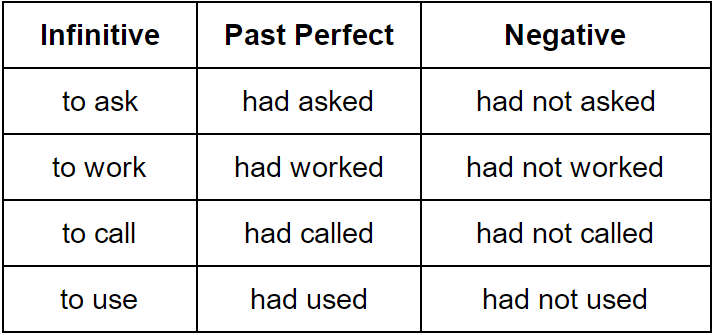
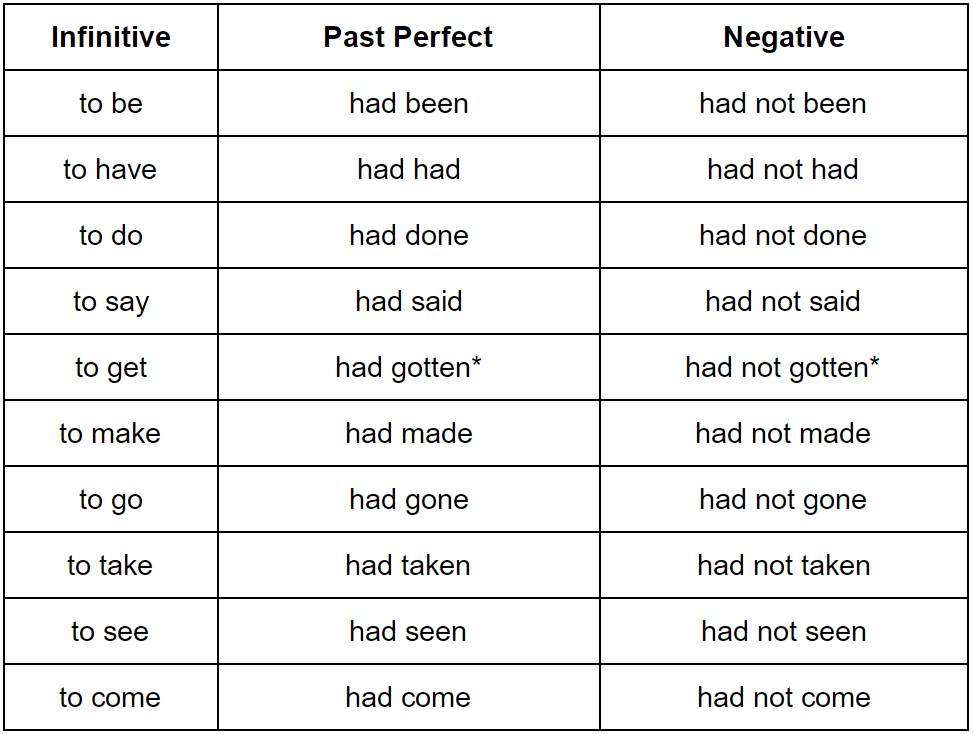
The formula for the past perfect tense is had + [past participle]. It doesn’t matter if the subject is singular or plural; the formula doesn’t change.
When to Use the Past Perfect
So what’s the difference between past perfect and simple past? When you’re talking about some point in the past and want to reference an event that happened even earlier, using the past perfect allows you to convey the sequence of the events. It’s also more precise and more specific. For example, consider the difference between these two sentences:
Example: We were relieved that Tootles used washable paint. We were relieved that Tootles had used washable paint.
It’s a subtle difference, but the first sentence doesn’t tie Tootles’s use of washable paint to any particular moment in time; readers might interpret it as “We were relieved that Tootles was in the habit of using washable paint.” However, in the second sentence, the past perfect clarify that you’re talking about a specific instance of using washable paint.
Another time to use the past perfect is when you are expressing a condition and a result:
Example: If I had woken up earlier this morning, I would have caught Tootles red-handed.
The past perfect is used in the part of the sentence that explains the condition (the if-clause).
Most often, the reason to write a verb in the past perfect tense is to show that it happened before other actions in the same sentence described by verbs in the simple past tense. Writing an entire paragraph with every verb in the past perfect tense is unusual.
When Not to Use the Past Perfect
Don’t use the past perfect when you’re not trying to convey some sequence of events. For example, if your friends asked what you did after you discovered the graffiti, they would be confused if you said:
Example: I had cleaned off the door.
They’d likely be wondering what happened next because using the past perfect implies that your action of cleaning the door occurred before something else happened, but you don’t say what that something else is. Of course, the “something else” doesn’t always have to be explicitly mentioned, but context needs to make it clear. In this case, there’s no context, so the past perfect doesn’t make sense.
Common Regular Verbs in the Past Perfect Tense
Common Irregular Verbs in the Past Perfect Tense


.png)
.png)
No comments:
Post a Comment